
As the aroma of simmering vegetables fills the kitchen, I can’t help but feel a wave of nostalgia wash over me. Traditional German soup is not just a meal; it’s a warm embrace that brings comfort to chilly evenings and fosters a sense of togetherness. These recipes highlight hearty, seasonal ingredients and are perfect for anyone looking to spice up their weeknight dinners. What I love most is how quickly they come together, making them an ideal choice for busy home chefs eager to escape the fast-food frenzy. Plus, these soups are freezer-friendly, allowing you to savor a taste of Germany whenever the mood strikes. Ready to dive into these deliciously wholesome bowls of goodness? Let’s explore the rich flavors and stories behind each comforting recipe!

Why choose this cozy German soup?
Comforting and heartwarming, each spoonful of these German soups offers a delightful taste of tradition. Quick prep means you can whip up a delicious meal in no time, making it perfect for those hectic weeknights. Versatile in nature, these recipes work beautifully with various seasonal ingredients, so you can customize to your heart’s content. Crowd-pleasing, they create a cozy atmosphere whether you're hosting guests or enjoying a meal with family. Plus, don’t forget to pair them with crusty bread or pretzels for that extra touch of authenticity!
German Soup Ingredients
• Explore the essentials for creating these hearty dishes!
For the Base
- Vegetable broth – A flavorful foundation that serves as the heart of your German soup.
- Onion – Adds sweetness and depth; you can substitute with shallots for a milder taste.
- Garlic – Brings a fragrant kick; fresh cloves work best but powdered garlic is a fine alternative.
For the Vegetables
- Carrots – Sweet and colorful, offering a nutritious boost; zucchini makes a great substitute.
- Celery – Adds crunch and flavor; if unavailable, try bell peppers.
- Potatoes – Essential for heartiness; if you're looking for a healthier option, sweet potatoes are a fantastic alternative.
For Flavoring
- Bay leaves – Infuse your soup with a subtle earthiness; remove before serving.
- Thyme – A classic herb that pairs beautifully; rosemary is an excellent substitute as well.
For Protein
- Sausage – A staple in many German soups, adding richness; feel free to use turkey or chicken sausage for a lighter touch.
- Beans – For a vegetarian twist, kidney or white beans offer great protein without sacrificing flavor.
Optional Toppings
- Fresh parsley – Adds a burst of color and freshness; cilantro can be used for a twist.
- Croutons – Perfect for crunch; make your own with leftover bread to elevate the dish!
Now you have all the needed ingredients to start your culinary journey into the world of comforting German soup!
Step‑by‑Step Instructions for German Soup
Step 1: Prepare the Aromatics
Start by finely chopping one onion and mincing two cloves of garlic. Heat a large pot over medium heat and add a splash of oil. Once the oil is shimmering, sauté the onions for about 5 minutes until they are translucent and fragrant. Stir in the garlic and cook for an additional minute, ensuring it doesn’t burn. This aromatic base will elevate your German soup right from the start.
Step 2: Add Vegetables
Next, dice three medium carrots, two celery stalks, and two medium potatoes. Add these colorful veggies to the pot and stir them well with the onions and garlic. Cook for 8-10 minutes, allowing the vegetables to soften slightly and develop their flavors. As they sauté, their vibrant colors will fill your kitchen with a warm and inviting aroma.
Step 3: Pour in the Broth
Pour in 6 cups of vegetable broth, ensuring all the vegetables are submerged. Bring the mixture to a gentle boil over medium-high heat. Once boiling, reduce the heat to a simmer and add two bay leaves and a teaspoon of dried thyme. Let the soup simmer uncovered for about 20-25 minutes, or until the potatoes are fork-tender, providing that hearty texture typical of a comforting German soup.
Step 4: Incorporate Protein
If you’re using sausage, slice it into bite-sized pieces and add it to the pot. Alternatively, for a vegetarian option, introduce one can of rinsed and drained beans. Stir well and allow everything to simmer together for another 10 minutes. This step ensures the flavors meld beautifully, enriching your German soup with protein and depth.
Step 5: Adjust Seasonings
Taste your soup and season it with salt and black pepper to your liking. If you prefer a little heat, a pinch of red pepper flakes can be added at this stage. Stir in fresh parsley for a burst of brightness just before serving. This adjustment creates a perfect balance of flavors that make traditional German soup truly delightful.
Step 6: Serve and Enjoy
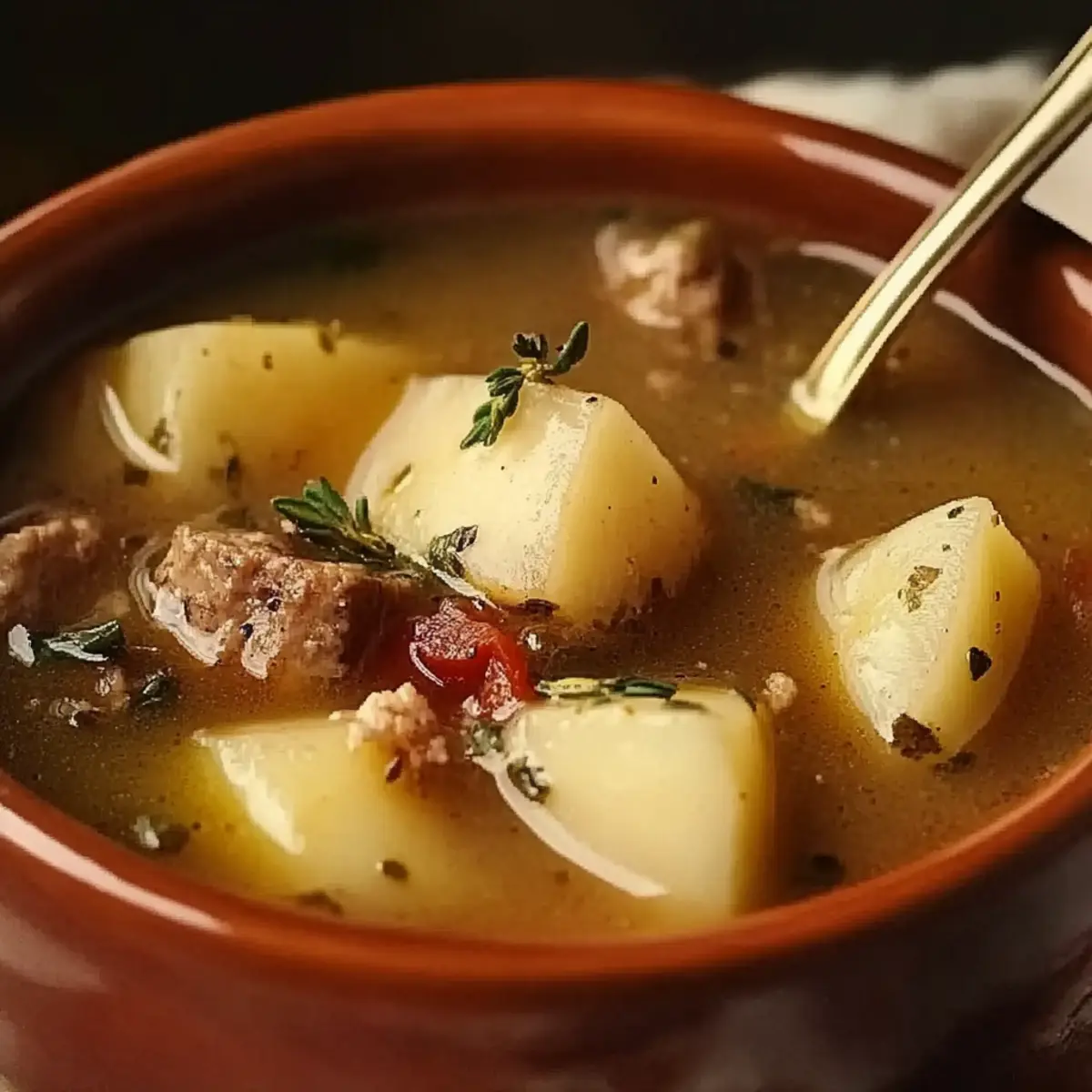
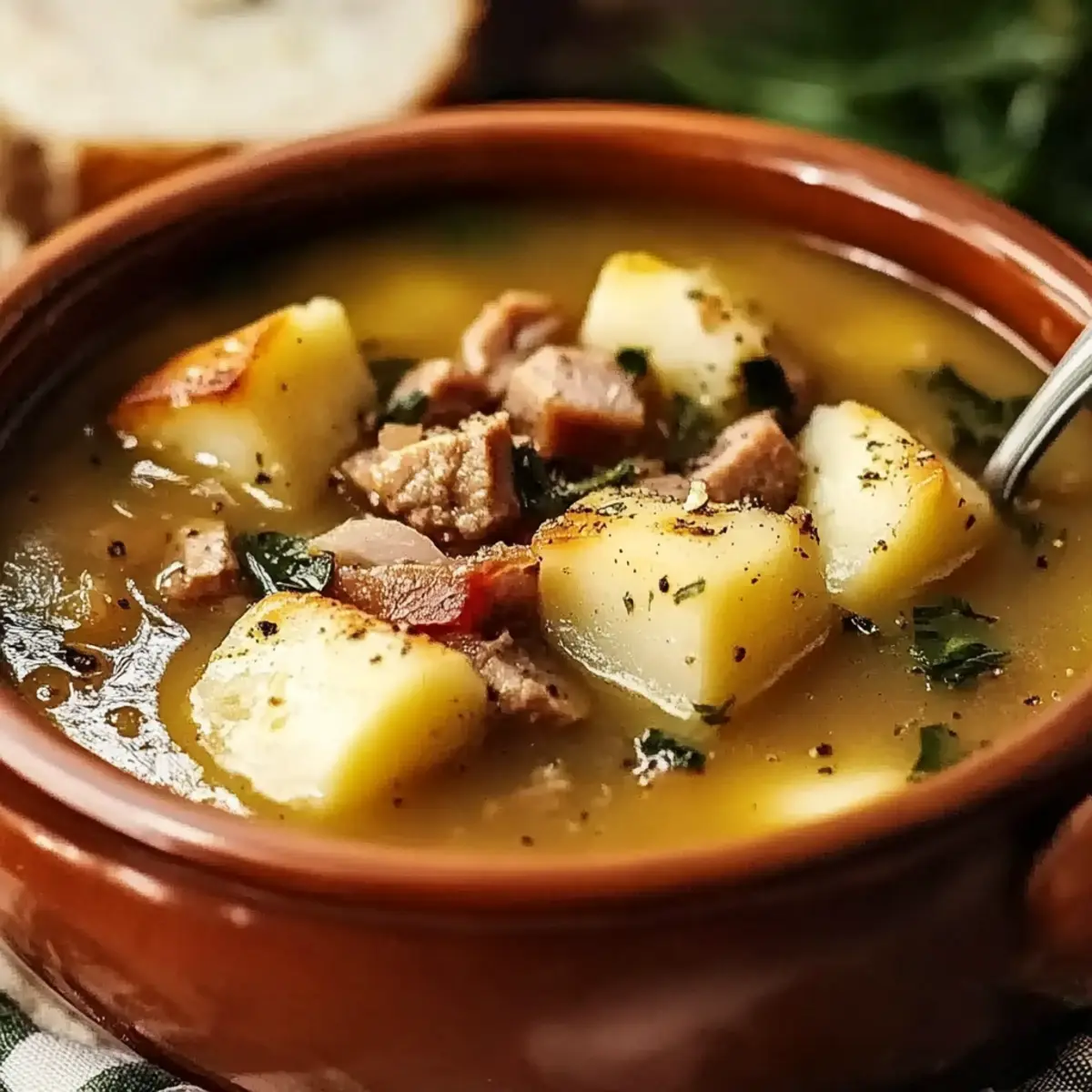
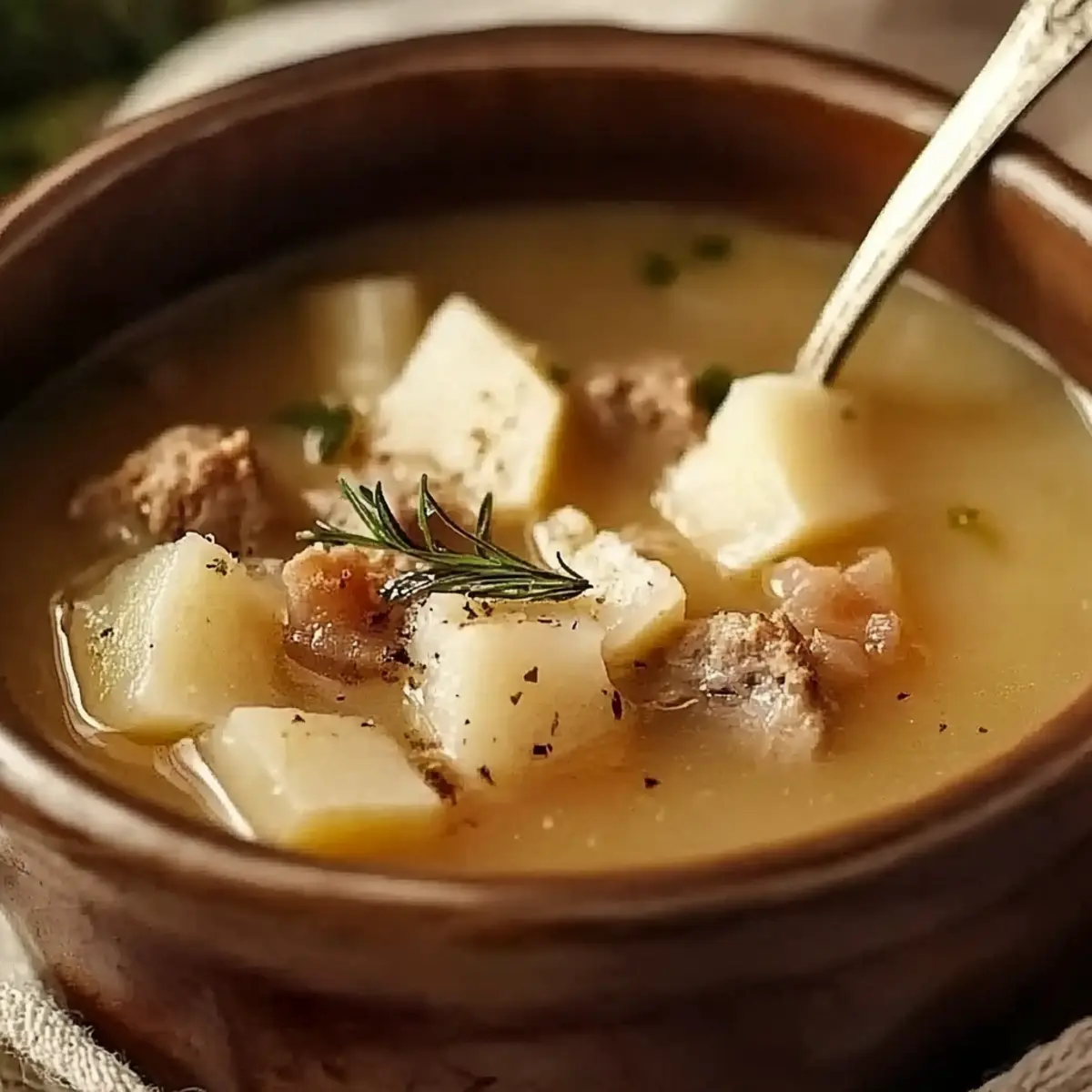
Once your German soup is ready, ladle it into bowls and garnish with additional fresh parsley or homemade croutons for added texture. Serve steaming hot alongside crusty bread or fresh pretzels for an authentic touch. The warm, inviting colors and scrumptious flavors will create a delightful dining experience filled with comforting warmth for you and your loved ones.
Storage Tips for German Soup
Fridge: Store your German soup in an airtight container in the fridge for up to 3 days. This keeps the flavors fresh and allows you to enjoy a comforting meal quickly.
Freezer: For longer storage, freeze the soup in portion-sized containers for up to 3 months. Make sure to leave some space at the top of the container, as the soup will expand while freezing.
Reheating: When you’re ready to enjoy your frozen German soup, thaw it overnight in the fridge, then heat gently on the stove over low heat. Stir occasionally until heated through for optimal flavor.
Will It Last? Always check for any signs of spoilage before reheating your soup, ensuring your meal remains as delightful as the day it was cooked!
German Soup Variations & Substitutions
Feel free to tailor your German soup to your taste buds with these delightful twists and swaps!
-
Vegan: Use vegetable broth and skip the sausage for a plant-based delight. Add chickpeas for protein and heartiness.
-
Spicy Kick: For a fiery flair, toss in some diced jalapeños or a teaspoon of smoked paprika. This will warm your soul and ignite your taste buds.
-
Creamy Texture: Add a splash of heavy cream or a dollop of sour cream just before serving. This dreamy touch adds richness that elevates the entire dish.
-
Herb Variability: Swap thyme for dill or basil for a refreshing aroma. Each herb offers a new twist, perfect for experimenting.
-
Root Veggie Blend: Instead of regular potatoes, try parsnips or turnips for a unique flavor profile that gives your soup a sweet and earthy touch.
-
Protein Boost: Incorporate lentils or quinoa instead of traditional meats. They provide a hearty, nutritious alternative without losing flavor.
-
Citrus Zing: Squeeze some fresh lemon juice or add lemon zest before serving. This brightens the flavors and adds a delightful contrasting note.
-
Savory Additions: Consider adding a handful of kale or spinach for extra nutrition. These greens wilt beautifully into the soup, bringing vibrant color and health benefits.
Embrace the cozy warmth of your German soup, and don’t hesitate to make it uniquely yours! Serve alongside some pretzels or a fresh side salad for a perfectly balanced meal.
What to Serve with Traditional German Soup?
Nothing completes a cozy bowl of soup like the perfect accompaniments to elevate your family dinner experience.
-
Crusty Bread: This classic side offers a crunchy contrast and is perfect for dipping. A slice of sourdough or whole grain can soak up all that delicious broth.
-
Soft Pretzels: Fresh, warm pretzels provide a delightful twist and authentic German flair. Their chewy texture pairs beautifully with the rich flavors of the soup.
-
Fresh Side Salad: A crisp green salad adds brightness and balance, with a light vinaigrette to contrast the hearty soup. Think mixed greens with a zesty lemon dressing.
-
Pickled Vegetables: The tanginess of pickled cucumbers or red onions can cut through the richness, enhancing the comfort of your German soup.
-
Sour Cream: A dollop on top adds creaminess and a slight tang that complements the flavors perfectly. Fresh chives or dill can add an aromatic kick!
-
Red Wine: A glass of light red wine, such as Pinot Noir, harmonizes wonderfully with savory notes while enhancing the dining experience.
-
Dark Chocolate Cake: For dessert, a slice of rich dark chocolate cake is indulgent yet elegant. It rounds out the meal with a sweet finale that contrasts the savory soup.
These pairing ideas not only bring a delightful balance of flavors and textures but also transform your German soup experience into a memorable feast for the senses!
Expert Tips for German Soup
-
Fresh Ingredients: Use seasonal vegetables for the best flavor; avoid overcooking them to retain their vibrant color and nutrients.
-
Broth Matters: Invest in quality vegetable broth as the base for your German soup; homemade broth can elevate the taste tremendously.
-
Spice Adjustments: Start with less salt and pepper; you can always add more later, as flavors develop during cooking.
-
Texture Perfection: For a creamier consistency, consider blending a portion of the soup before adding the protein, avoiding a chunky texture if that’s not your preference.
-
Make-Ahead Magic: Prepare your German soup a day in advance. The flavors deepen overnight, and it makes for an easy weeknight dinner when reheated.
-
Storing Tips: Cool your soup completely before storing in airtight containers. Perfectly store and freeze for quick meals later without compromising taste!
Make Ahead Options
These cozy German soups are perfect for meal prep enthusiasts looking to save time during busy weeknights! You can chop the vegetables and prepare the aromatic base (onion and garlic) up to 24 hours in advance. Simply refrigerate the prepared ingredients in an airtight container. For even more convenience, you can cook the soup completely and store it in the fridge for up to 3 days. When you're ready to serve, just reheat the soup on the stovetop over medium heat until warmed through, adjusting the seasonings as needed. This way, you can enjoy a flavorful bowl of German soup that’s just as delicious as if made fresh!
Traditional German Soup Recipes Recipe FAQs
How do I select the right vegetables for my German soup?
Absolutely! For the best flavor, select vegetables that are in season. Look for carrots that are firm with a bright orange color, potatoes without any dark spots or blemishes, and celery that is crisp and has vibrant green leaves. Fresh ingredients make a significant difference in the taste of your soup.
How should I store my German soup?
Store your German soup in an airtight container in the refrigerator for up to 3 days to maintain freshness. If you wish to keep it longer, transfer it to the freezer in portion-sized containers for up to 3 months. Remember to let the soup cool completely before sealing it, which helps avoid condensation that can dilute flavors.
Can I freeze German soup, and how do I do it?
Very! Freezing is a fantastic way to preserve your German soup. To freeze, allow your soup to cool completely. Next, pour it into freezer-safe containers or zip-top bags, leaving about an inch at the top for expansion. Label the containers with the date and type of soup. When you’re ready to eat, thaw it overnight in the refrigerator and reheat gently on the stovetop.
What are some common troubleshooting tips for my German soup?
If your soup lacks flavor, it could be due to under-seasoning. Don’t hesitate to add salt, pepper, or herbs to enhance the taste. If it’s too thick, simply add a little broth or water to reach your desired consistency. On the other hand, if it’s too watery, simmer it uncovered for a while to evaporate excess moisture and deepen the flavors.
Are there any dietary considerations I should be aware of?
Absolutely! If you're cooking for someone with allergies, be mindful of ingredient substitutions. For instance, if using sausage, look for gluten-free options, or if preparing for vegetarians, opt for beans as a protein source. Also, ensure to check that the broth is free from allergens. Always communicate with your guests regarding their dietary restrictions to make the meal enjoyable for everyone!
How long does homemade German soup last?
Homemade German soup can last up to 3 days when stored properly in the fridge. However, in the freezer, it can stay fresh for up to 3 months! Always check for spoilage signs, like unusual odors or mold, before consuming any leftovers. Enjoy the comforting flavors of your creation while ensuring it’s safe to eat!
Savor Cozy German Soup Recipes for a Comforting Meal
Ingredients
Equipment
Method
- Finely chop the onion and mince the garlic. Heat a large pot over medium heat, add a splash of oil, and sauté the onions for about 5 minutes until translucent. Stir in the garlic and cook for an additional minute.
- Dice the carrots, celery, and potatoes, then add them to the pot with the onions and garlic. Cook for 8-10 minutes until the vegetables soften slightly.
- Pour in the vegetable broth, bring to a gentle boil, reduce to a simmer, add bay leaves and thyme, and let it simmer for 20-25 minutes, or until the potatoes are fork-tender.
- Slice the sausage and add it to the pot, or add the rinsed beans for a vegetarian option. Simmer for another 10 minutes to meld flavors.
- Taste the soup and season with salt and black pepper. Stir in fresh parsley before serving.
- Ladle the soup into bowls and garnish with additional parsley or croutons. Serve hot with crusty bread or pretzels.




Leave a Reply